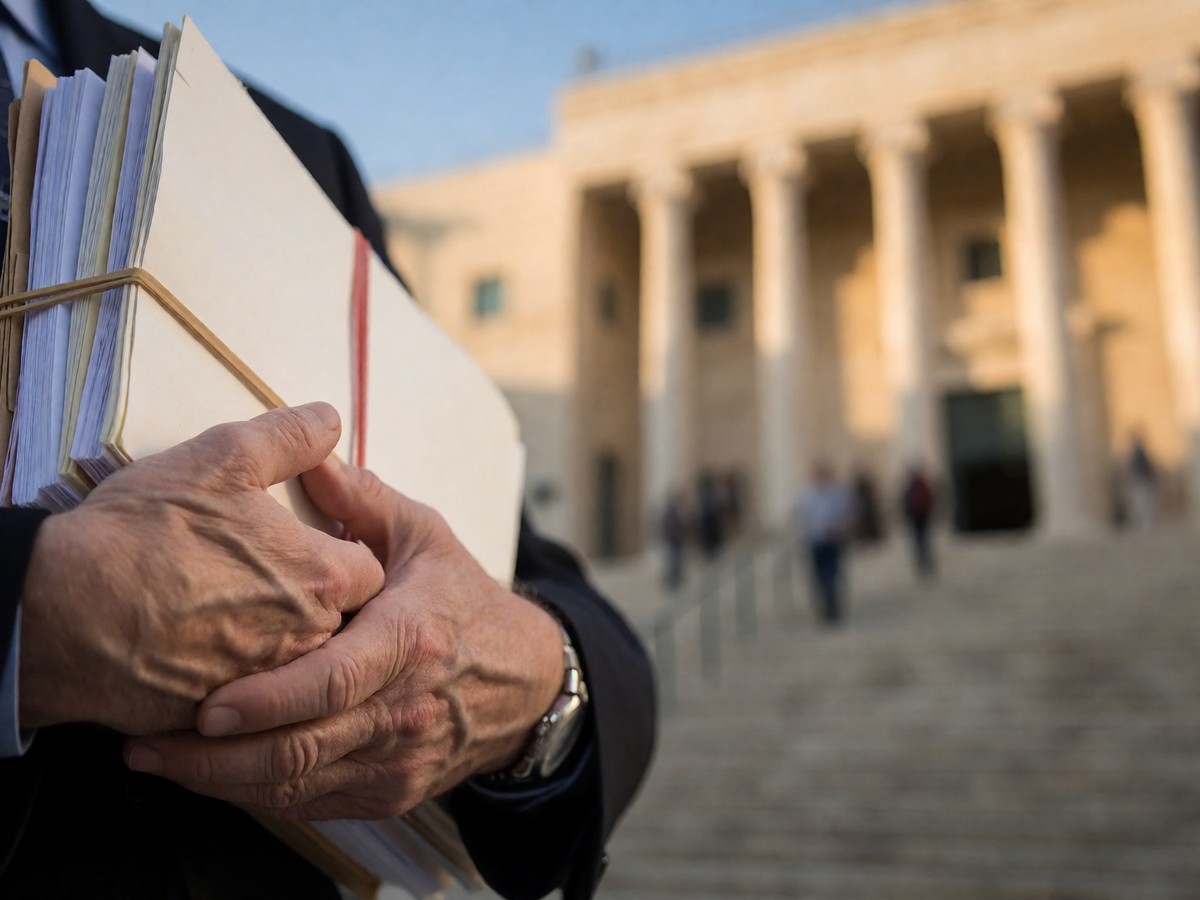
A judging panel at the Jerusalem District Court summoned the Attorney General on Wednesday to discuss the prosecution of Benjamin Netanyahu. Judge Rivka Friedman-Feldman told Attorney General Gali Baharav-Miara that the low chances of conviction in Case 4,000 warrant a reconsideration of the matter regarding the alleged reciprocal arrangement with the controlling shareholder of Israel’s largest telecoms company. This case involves accusations that Netanyahu granted government favors in exchange for positive media coverage. The judges also questioned whether his actions in Case 2,000, which concerns another alleged quid-pro-quo with a media baron, met the threshold for criminal conduct. While they left the possibility of a conviction in Case 1,000 open, Case 1,000 involves allegations that Netanyahu acted for the benefit of an Australian billionaire who gave him cigars and champagne. Baharav-Miara said she would consider the judges’ recommendations to rethink how the trial moves forward in the public interest after the court expressed its concerns.
| Case Number | Primary Allegation | Judicial Status |
|---|---|---|
| Case 4,000 | Reciprocal arrangement with telecoms shareholder | Low chance of conviction |
| Case 2,000 | Quid-pro-quo with media baron | Criminality questioned |
| Case 1,000 | Benefit from Australian billionaire | Conviction remains possible |
Netanyahu first faced these charges in 2019, but court proceedings faced prolonged delays because of the recent Israel-Gaza war. Judges agreed to reduce the number of hearings because of security concerns around the conflict. This development provides a boost to Netanyahu as he fights for political survival.
Netanyahu response and political impact
Netanyahu denied the allegations and called for the trial to end "immediately" during a televised statement on Wednesday. He told the public that he faced "ten years of terrible suffering" due to "ten years of incitement to hatred that wounds the soul." His opponents argue that his fear of prison distorted his decision-making as prime minister and made him dependent on far-right coalition partners. Israel’s president tasked opposition leader Gadi Eisenkot with forming a government following an inconclusive general election last month. Netanyahu’s parliamentary bloc won more seats than the bloc led by Eisenkot, but neither party achieved an outright majority. Netanyahu also remains subject to an arrest warrant from the International Criminal Court for alleged war crimes in Gaza, a charge he also denies.