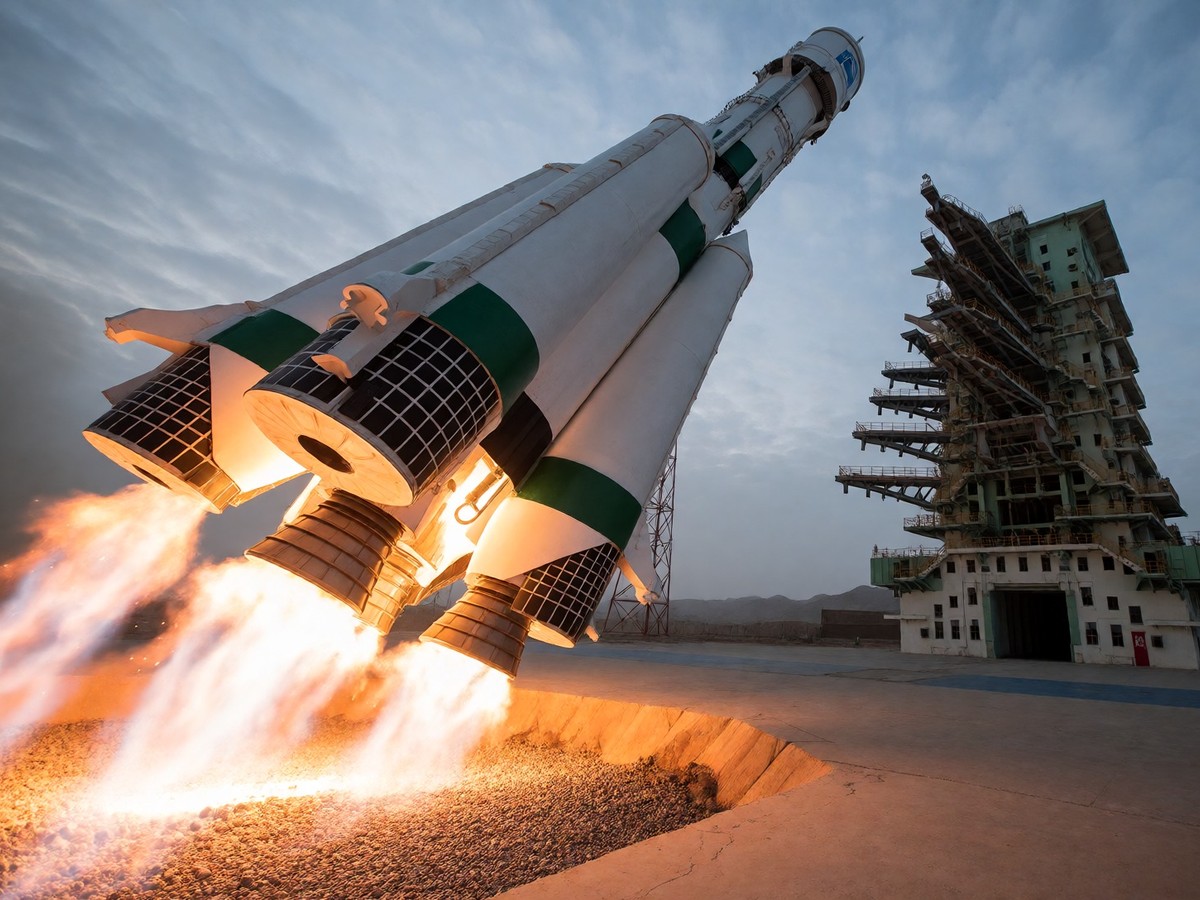
The Shenzhou-24 mission launches Wednesday from the Jiuquan launch centre in China’s northwestern Gobi Desert at 8:18am Beijing time (00:18 GMT). Muhammad Zeeshan Ali, a 40-year-old Pakistani Air Force pilot and payload specialist, will become the first foreign astronaut to board the Tiangong space station. Ali stated he carries "the hopes of 250 million Pakistanis" with him. He will fly alongside commander Tang Hongbo, 51, and flight engineer Wu Yi, who is in her late thirties. This mission uses a Long March-2F rocket. After reaching orbit, the spacecraft will conduct an autonomous rendezvous lasting about three and a half hours before it docks with the forward port of the station’s Tianhe core module to complete the mission. Ali will spend about a week on the station according to SUPARCO, before returning to Earth on the Shenzhou-23 spaceship, which docked at the Tiangong in May. The current Tiangong crew includes Zhu Yangzhu, 40, Lai Ka-ying, 40, and Zhang Zhiyuan, 40. Lai Ka-ying is the only woman currently aboard the station and is Hong Kong’s first astronaut. Zhu Yangzhu will remain in orbit to complete a full-year stay to test endurance for future lunar ambitions.
| Mission Parameter | Detail |
|---|---|
| Launch Site | Jiuquan launch centre, Gobi Desert |
| Launch Time | 8:18am Beijing (00:18 GMT) |
| Rocket | Long March-2F |
| Crew Members | Tang Hongbo, Wu Yi, Muhammad Zeeshan Ali |
| Return Vessel | Shenzhou-23 |
| Duration | ~5 to 7 days |
Selection and training in Beijing
The selection of Ali and fellow Pakistan Air Force pilot Khurram Daud followed a three-stage process including screening in Pakistan and technical assessments. The China Manned Space Agency (CMSA) named them reserve astronauts on April 22. Prime Minister Shehbaz Sharif met them in Islamabad on April 23, and they began training at the Astronaut Center of China on April 24. During training, Ali practiced centrifuge, rescue and survival, and emergency procedures in simulators. I find the reliance on Chinese-language technical software and instructions to be a significant difficulty for the crew’s coordination. Tang Hongbo noted that all labels and instructions aboard the spacecraft are in Chinese, requiring Ali to master technical Chinese despite having virtually no prior foundation in the language. The crew also increased their English learning to manage the mission. Planning Minister Ahsan Iqbal, who is currently in China, noted that both pilots performed well in training. Daud asked Pakistanis to pray for him in a video released by the Ministry of Information and Broadcasting, saying he wanted to "make my nation and my country proud." This mission follows Namira Salim, a Monaco-based explorer, who flew on a Virgin Galactic mission in October 2023.
Scientific experiments and lunar targets
Ali will oversee four joint science projects in biotechnology and materials during his mission. He will conduct an experiment involving cyanobacteria, photosynthetic microorganisms, and oversee tests in life sciences, fluid physics, and materials science. These experiments have potential applications in food security, climate resilience, and industrial innovation. Qamarul Islam, a space scientist, said research institutes and universities in Pakistan submitted these proposals to SUPARCO. SUPARCO expects the completion of these four experiments to take between six and 12 months. The mission functions as a launchpad for future cooperation between Islamabad and Beijing. Ali said he hopes the next chapter of cooperation grows "to Moon, Mars, and beyond." Pakistan and China work on a lunar mission tentatively planned for 2028. This follows the 2024 deployment of the iCube-Qamar satellite on the Chang’e-6 mission. A SUPARCO-developed rover is also due to fly on the Chang’e-8 mission around 2028. Beijing aims to put astronauts on the Moon by 2030 and is preparing tests for the Long March-10 rocket and Mengzhou crewed spacecraft. Qamarul Islam noted that sending a person into space introduces scientific challenges regarding isolation and the supply of oxygen and food.