Rutte promises space defense
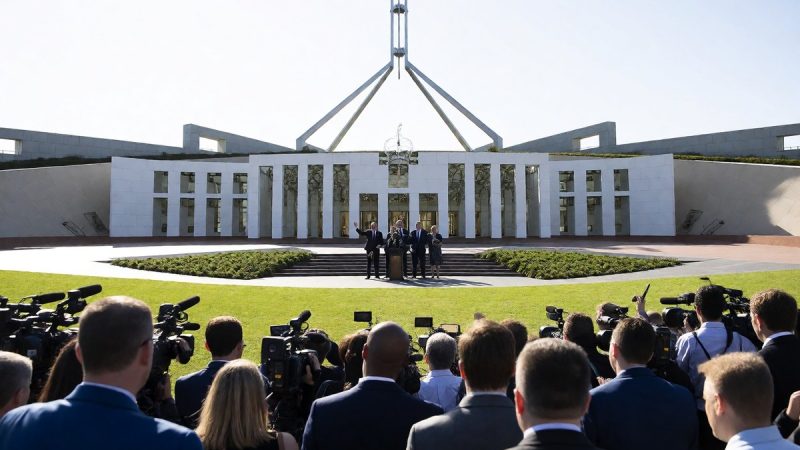
NATO Secretary General Mark Rutte promised the alliance will defend every inch of NATO territory, including the "space element," after German reports stated Russia is preparing a nuclear-armed satellite. German media outlets NDR, WDR, and Suddeutscher Zeitung claim the Russian satellite, named "Sputnik-S," carries a nuclear warhead and could be used to destroy important communication and observation satellites. Intelligence reports shared among NATO countries this month suggest a possible launch within 60 days. Rutte told a press conference in Berlin alongside Chancellor Friedrich Merz that the alliance has various response options and will update its deterrence assessments as necessary. Merz said the reports show the level of escalation Russia is prepared to pursue, though he did not confirm the specific plans. The Russian embassy in Berlin rejected the reports as unfounded and called them a propaganda campaign. I find the German government’s dismissal of nervousness regarding hypothetical dangers through spokesman Stefan Kornelius to be an inadequate response to intelligence regarding a potential nuclear launch in orbit.
Orbital threats and treaty violations
The threat of a nuclear-armed satellite in orbit poses a danger to the 15,000 active satellites currently in space. Bleddyn Bowen from Durham University said that exploding a nuclear weapon in space would have massive infrastructural effects because there are more than 15,000 active satellites. Josef Aschbacher, head of the European Space Agency, described having nuclear weapons in space as "the ultimate nightmare scenario." While Kremlin spokesman Dmitry Peskov dismissed the reports as hardly worth taking seriously, Russia remains a signatory to the 1967 Outer Space Treaty which bans weapons of mass destruction in orbit. President Vladimir Putin previously stated that Russia is categorically against the deployment of nuclear weapons in space. This follows a 2024 accusation from the US that Russia was developing a "space-based" anti-satellite weapon armed with a nuclear warhead, an accusation which Russia denied. US Secretary of the Air Force Troy Meink noted in September that the US has "on-orbit, space-control weapons" circling the planet, though he provided no specifics regarding the technology. In response to the US announcement, Peskov told Russian media that space must be free of any weapon.