The first images from the Hera mission provide a clear look at the massive destruction caused by the DART impact. The ESA spacecraft Hera is inspecting the site of the 2022 NASA DART impact on the asteroid Dimorphos. These images show a crater nearly as large as the celestial body itself. The original collision changed the orbit of the asteroid Dimorphos, which is 150 meters wide, by reducing its 11 hour and 55 minute orbital period around the larger 730 meter asteroid Didymos by 33 minutes. The original impact occurred at 22,000 km per hour and sent a debris trail 10,000 kilometers long into space. This massive debris trail was detectable by both ground and space telescopes. Dr. Sabina Raducan, a planetary scientist on the Hera team, says the crater is almost as large as the body. "It is difficult to describe with words the emotion I felt when I finally saw what happened," she said. Dr. Raducan, who is a lover of craters, added that the sight is beautiful. Scientists chose the asteroid for this test because it orbits the larger Didymos, providing a way to test planetary defenses using a binary system.
Chaotic motion and rocky debris
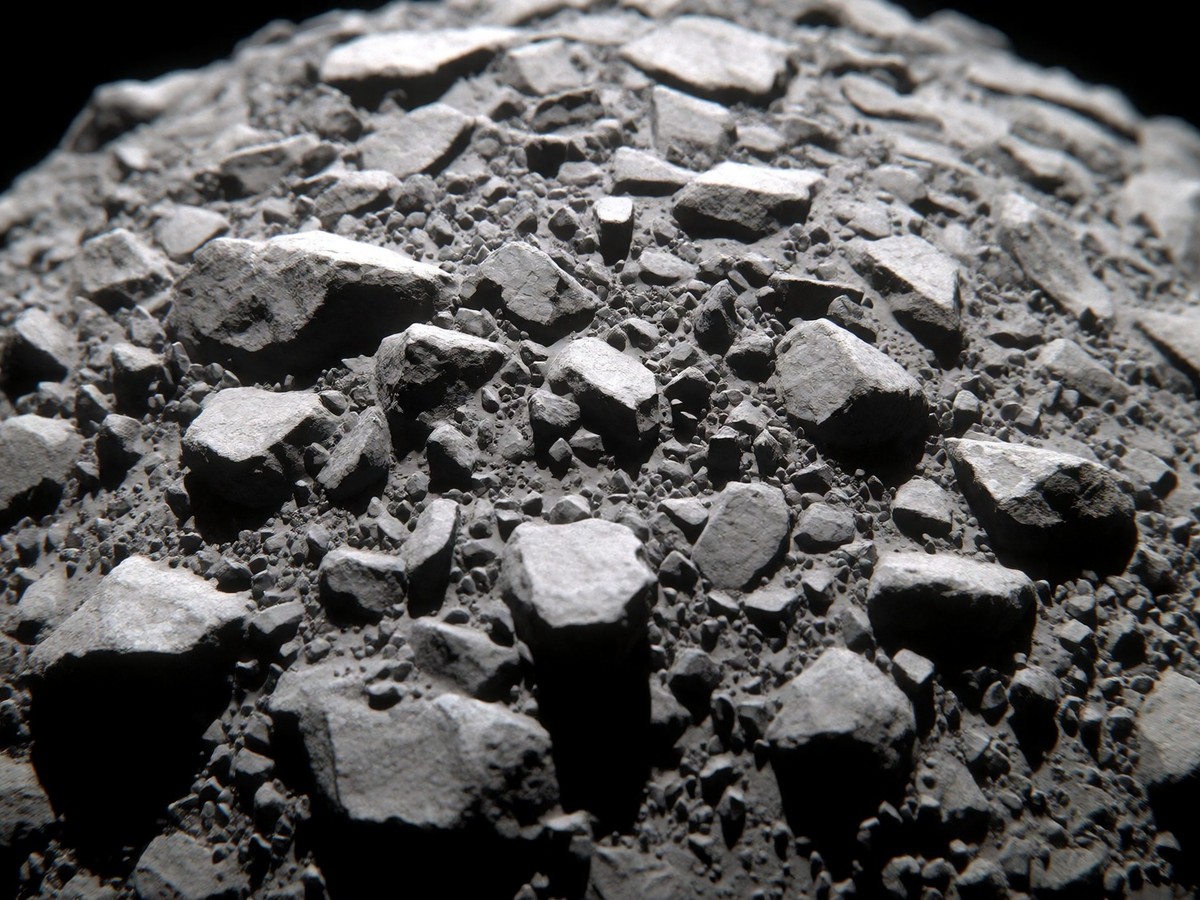
The mission inspects the site of the collision to evaluate the consequences. Patrick Michel, the lead researcher for the Hera mission, compares the spacecraft to an inspector returning to an accident scene. The impact altered the rotation of Dimorphos, turning it from a body that always showed one face to Didymos into something chaotic. Dr. Raducan says the asteroid now moves like a "tumbling barrel" as it orbits Didymos. Naomi Murdoch, a Hera mission member, reports that the gravity on Didymos is 40,000 times lower than Earth’s gravity. The images show rocks between 3 and 10 meters in size. These rocks, which Murdoch describes as being the size of "cars and buses," sit on a surface containing hundreds of smaller rocks ranging from 10 centimeters to 1 meter in diameter. This debris field makes operating the spacecraft and its two shoe-box sized nanosatellites difficult. These nanosatellites can study the impact site closely and land on the asteroid. The mission will spend the next six months studying the system with high resolution images.
| Feature | Dimorphos | Didymos |
|---|---|---|
| Width | 150 meters | 730 meters |
| Orbit Period Change | 33 minutes | N/A |
| Gravity Comparison | N/A | 40,000x less than Earth |
| Visible Rock Size | 3 to 10 meters | 3 to 10 meters |
Planetary defense and upcoming missions
Scientists want to use Hera to measure the mass of Dimorphos to improve planetary defense models. This data helps scientists predict the mass and velocity required to divert an asteroid if one heads toward Earth. Professor Simon Green, a planetary scientist with the Hera team, says this information helps determine the specific mass and speed needed to prevent a collision. Medium sized asteroids like Dimorphos could destroy a city. Larger ones over 1 kilometer could cause global devastation. Carolyn Ernst of the Johns Hopkins Applied Physics Laboratory notes that the atmosphere protects Earth from small objects, but intermediate sized rocks are harder to track. "We all know what happened to the dinosaurs and we do not want that to happen to us," Ernst said. In 2027, the NEO Surveyor space telescope will launch to track potentially dangerous objects. Scientists also plan to visit the 450 meter long asteroid Apophis, which was discovered in 2004. This asteroid will not impact Earth for at least 100 years, even though earlier estimates suggested a collision on April 13, 2029. Two spacecraft, NASA’s Osiris-Apex and the ESA/JAXA mission Ramses, will head to Apophis. The Osiris-Apex mission previously collected a sample from the asteroid Bennu.