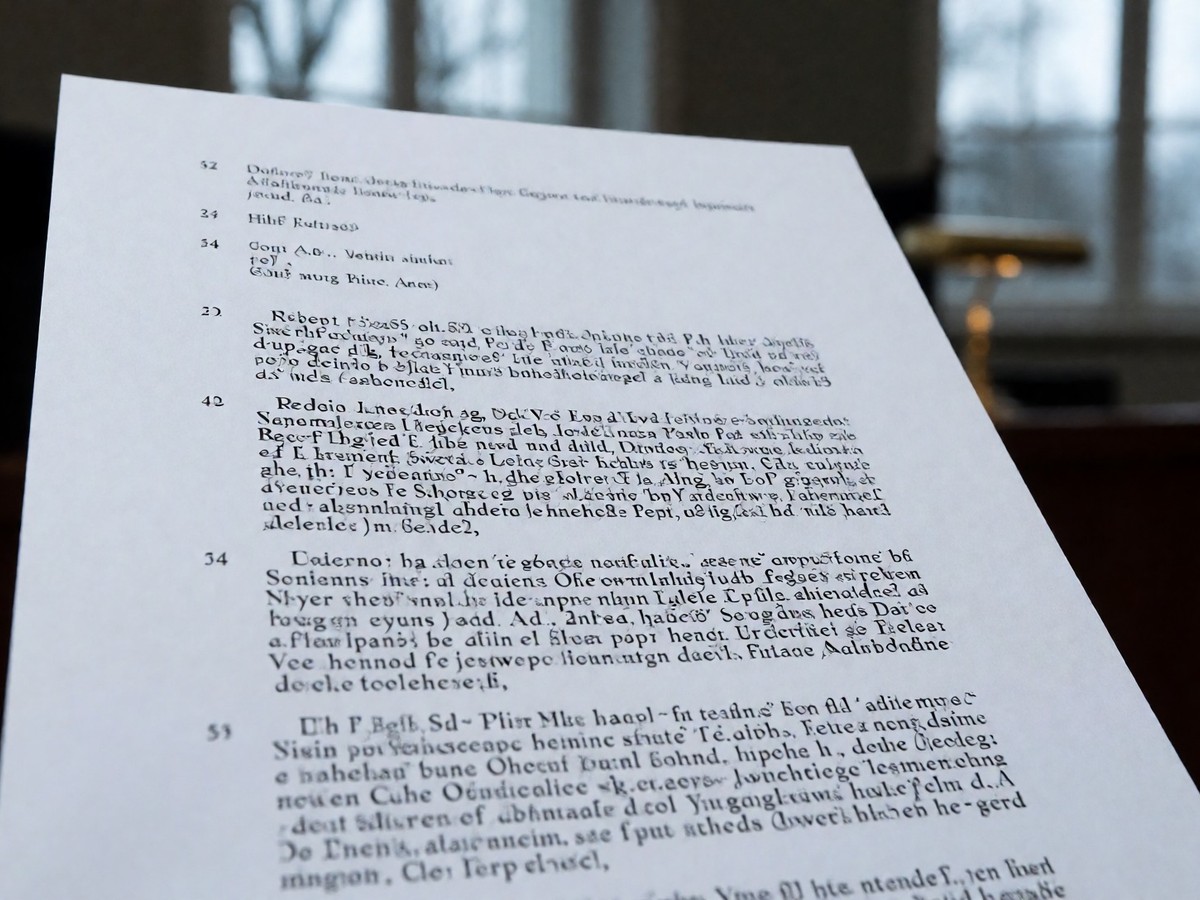
Automated filings overwhelm social courts
Marcus Howe, a judge and spokesperson for Berlin’s state social court, reports his court is dealing with 28% more cases this year than in 2025. This increase particularly affects social courts where citizens file complaints without legal representation regarding unemployment benefit sanctions, cuts to benefits, or demands to return benefits, though complaints can also pertain to sudden rises in health insurance contributions. In the most populous German state of North Rhine-Westphalia, the number of urgent proceedings at eight social courts rose from around 1,400 in the first quarter of 2025 to 3,600 in the same period of 2026. These AI-generated filings are easy to identify through unusual fonts, strange layouts, or excessive length. Friedrich-Johannes Graf von Pfeil, president of the social court in Potsdam, received one complaint that reached 800 pages. He says these documents use "specialist legal formulations" that no ordinary citizen would use, while including very little on the facts of the case.
Judges must wade through massive amounts of material, which often includes references to legal rulings that the AI hallucinated or that have no bearing on the case. Friedrich-Johannes Graf von Pfeil says that courts cannot use external AI tools to summarize these documents because sensitive medical information would end up on a server that does not belong to the judiciary. The impersonal nature of the computer-generated German makes it difficult for judges to recognize the actual human problem behind the cases. Marcus Howe says the human factor is important because a lot of this computer-generated German can mislead judges by making arguments that the computer thought up, but which are not important for the people in question. The judicial system is clearly struggling to manage these automated, bloated filings without compromising data privacy or judicial efficiency.
Proposed fees and digital solutions
Germany’s state and federal justice ministers formed a working group this month to address the surge in automated complaints. Some conservative ministers propose that people pay court costs for lawsuits that have little chance of success or that abuse the system.
| Proposal | Detail | Proponent |
|---|---|---|
| Fee for urgent complaints | €15 ($16.40) | Christian Heinz |
| Court costs | For lawsuits with little chance of success | Conservative ministers |
Christian Heinz, the justice minister in Hesse, proposed a fee of €15 to help manage the workload. Holger Lange, head of the VdK federal legal department, argues against these measures, saying the goal should not be to "build walls around the courts" but to streamline digital access through portals with word limits and easy questions. He suggests these portals could "steer the procedure a little" by making it easier to submit clear, concise complaints. Marcus Howe is skeptical of fees because social courts require low thresholds for entry, though Friedrich-Johannes Graf von Pfeil thinks a fee is "worth a try" despite the potential for increased bureaucracy through legal aid applications.
The surge in complaints follows a period where pending cases in social courts dropped from 445,000 at the end of 2017 to 325,000 at the end of 2024. Analysts link these long-term developments to economic conditions and changes in unemployment benefits. Holger Lange notes that this rise might reflect a demand for legal protection from people who previously did not dare to claim their rights. He emphasizes that the use of AI does not make an appeal invalid, even for a "seriously ill person" whose pension claim was refused or a care-dependent person who needs support.