Explosion hits government headquarters
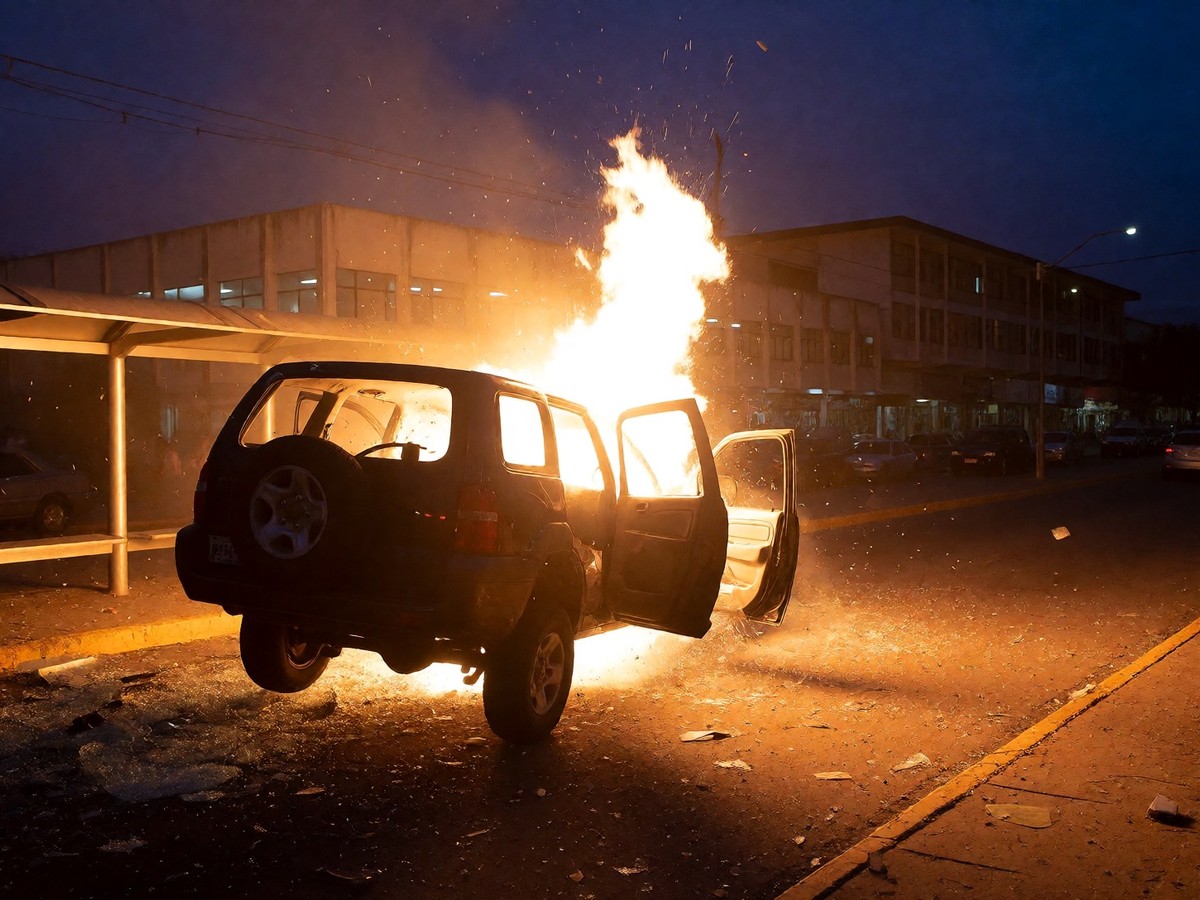
A car bomb targeting the governor’s office in Villavicencio injured at least 23 people on Monday night. The blast rocked the seat of government in Meta, a province bordering the capital, Bogota, to the southeast, and caused extensive damage to the building, surrounding businesses, and vehicles. Ricardo Alarcon, the Head of National Police Operations, told local media that initial tests show the vehicle carried between 80 and 100kg of pentite, a high explosive used in military warheads and civilian mining. President Abelardo de la Espriella accused Antonio Medina, an EMC commander, of plotting the bombing in retaliation for government offensives. "The bandit Antonio Medina from the [FARC] dissidents is to blame, and we’re going to go after him and make him pay with blood," de la Espriella told reporters during a visit to Villavicencio on Tuesday.
Pressure on dissident groups
The attack occurred on the eve of the 10-year anniversary of the 2016 peace deal. The current far-right government uses military force to tackle criminal organizations and suspended the negotiations initiated under the previous administration. The president confirmed yesterday the killing of EMC commander alias El Churco. The most powerful group, the EMC, operates under alias Ivan Mordisco, and the government set a 5 billion peso bounty, which is roughly $1.4m, for his capture or killing. Dissidents who refused to lay down their arms or returned to war have expanded control in Meta, a historical heartland for the FARC that officially demobilized in 2016, providing access to coca plantations, gold mining, and drug smuggling routes of the Amazon River Basin.
The president wrote on X this morning that "the narco-terrorists are running wild, launching desperate attacks, because they know we are defeating them and that their end is near." De la Espriella suggested that the bombing in Villavicencio was likely a retaliation against ramped-up state pressure on armed groups. "As the government increases pressure, armed and criminal groups are trying to raise the cost of doing that for the government by exerting pain, instilling fear and causing direct harm against communities and against the civilian population," Elizabeth Dickinson, deputy director for Latin America at the International Crisis Group, said.