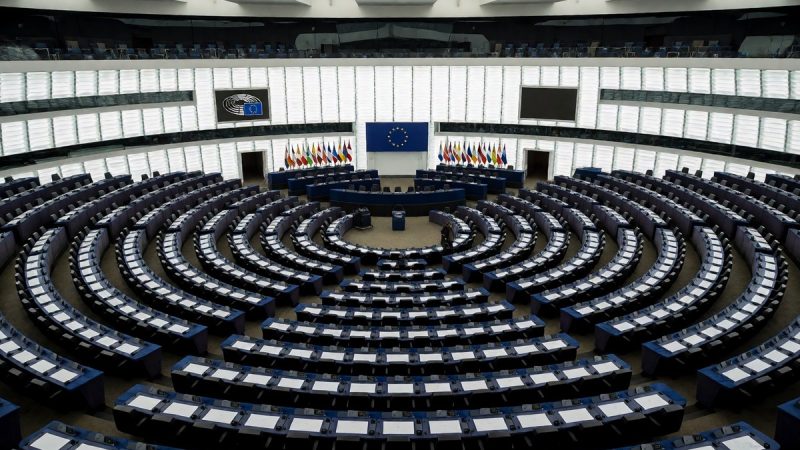
Germany’s 2027 budget involves €561 billion in spending and €210 billion in new borrowing. Lawmakers in the Bundestag are holding four days of final debates on how much money the federal government may spend in the coming year and on what. Chancellor Friedrich Merz (CDU) told the Bundestag on Wednesday that the country faces difficult geopolitical, technological, and demographic situations. He said that if the country does not change course, all federal revenue will eventually go toward social programs, interest payments, and defense. The government has held office for about 20 months and expects to spend just under €561 billion in the coming year. While Merz promised to align the budget with the constitutional debt brake, the 2027 spending reaches nearly €561 billion, requiring €210 billion in new borrowing to cover the shortfall. This spending level is the highest ever recorded, creating a deficit that only the COVID-19 pandemic exceeded. The 2027 budget exposes a coalition on the brink. Tino Chrupalla, co-leader of the Alternative for Germany (AfD), called the budget a "debt orgy" and said Merz will "go down in history as the chancellor who led Germany to bankruptcy." He calculated that the government will incur €401,000 in new debt every minute next year.
| Category | 2027 Amount |
|---|---|
| Total Spending | < €561 billion |
| New Borrowing | €210 billion |
| Defense Allocation | €109 billion |
| Total Defense (with special fund) | €139 billion |
Tensions over military and social spending
Defense spending for 2027 stands at €109 billion, which is €27 billion more than last year. Including the multi-year, debt-financed special military fund intended to modernize the armed forces, the total defense budget reaches €139 billion. The defense budget is now the highest in the history of the Federal Republic. Heidi Reichinnek, the parliamentary leader for the Left Party, accused the government of pursuing "militarization and boundless rearmament" while simultaneously enacting "brutal social cuts and an orgy of budget cuts." Tino Chrupalla of the AfD argued that a recent electricity tax reduction, pushed through at the last minute, saves the average family only €100 per year while President Volodymyr Zelenskyy receives €200 million in a single afternoon. Britta Hasselmann of the Green Party rejected these claims, stating that supporting Ukraine bolsters security for Germany and Europe. Merz told the Bundestag that Russia is escalating tensions in the Baltic region, Poland, the Black Sea, and space, and added that Moscow seeks escalation in Germany, even at the cost of lives. The Ministry of Labor and Social Affairs must manage costs exceeding €200 billion, which increases the pressure on the government.
Pension reform and tax disagreements
Germany’s demographic shift makes pension reform an immediate problem as the workforce born in the 1960s nears retirement. This workforce includes people from a time when more than a million children were born in Germany every year. Birth rates nearly halved by the mid-1970s and continued to decline thereafter. Because boomers make up one-third of the workforce, they will soon draw pensions. In 2025, the government contributed €127 billion toward the €420 billion in total pensions paid out, and for the 2027 budget, the government aims to save €3 billion on this figure. The coalition parties disagree on how to handle these rising costs. Matthias Miersch, the SPD parliamentary leader, said the government must increase revenue by taxing large fortunes and inheritances. He argued that heirs to family-owned businesses often pay significantly less in taxes than heirs to real estate or financial assets because they can avoid inheritance tax if they continue running the business. This exemption intends to protect businesses from having to pay taxes if they face a breakup or sale. Miersch emphasized in the Bundestag that large fortunes and inheritances must contribute more to public costs, and that this must apply to large companies, noting that putting this issue on the agenda is not off the table for the SPD. The political divide between the CDU/CSU and the SPD makes working together more difficult, especially with several state elections scheduled for the spring.