Starmind deployment and solar advantages
The US Federal Communications Commission granted SpaceX permission to build "Starmind," a network of 1 million satellites for space-based AI data centers. SpaceX must have 100,000 satellites in orbit by 2035 and 50% of the constellation in orbit by 2038. The company expects to have a total of 1 million satellites orbiting Earth within 15 years to meet the growing demand for artificial intelligence computing power.
| Metric | Target or Value |
|---|---|
| Total satellites | 1 million |
| 10% capacity | 100,000 by 2035 |
| 50% capacity | 50% by 2038 |
| AI energy demand (2030) | 945 terawatt-hours per year |
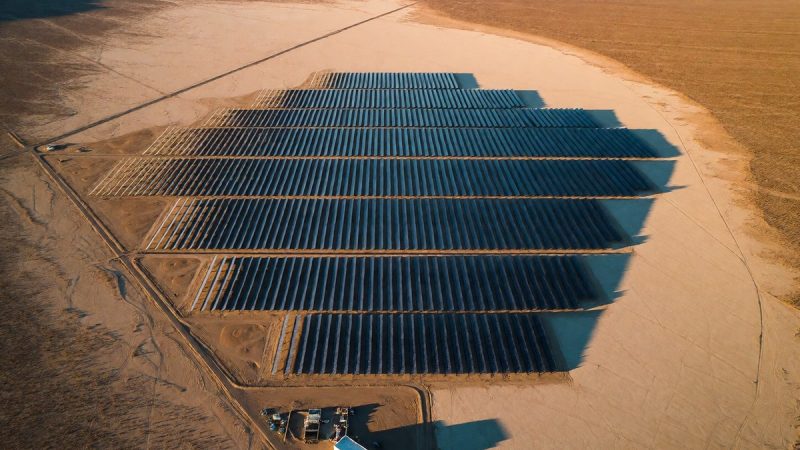
The International Energy Agency predicts AI electricity consumption could more than double to 945 terawatt-hours per year by 2030. Ulrich Speidel of the University of Auckland says that putting data centers into space is attractive because satellites have higher availability of solar energy. Because satellites receive sunlight for more than half the day and lack clouds, they can access plentiful energy. SpaceX says its satellites would take advantage of space’s plentiful energy and cooling possibilities, reducing the burden on Earth. This project also addresses water scarcity. Earth data centers consume between 313 billion and 764 billion liters (82.7 billion to 201.8 billion gallons) of water annually for cooling, and a quarter of these facilities sit in regions that regularly experience water shortages.
Technical hurdles and environmental risks
Richard Easther, a physicist at the University of Auckland, says the "Starmind" project is "at the very edge of technical feasibility." He notes that the Starlink project would have sounded far-fetched 15 years ago. Removing heat in a vacuum requires radiation rather than using the water or air cooling methods found on Earth. Laura Revell, a professor of atmospheric chemistry at the University of Canterbury, says the FCC timeline is unrealistic because it requires launching about eight satellites per hour until the deadline to complete the authorized constellation on November 25, 2040.
The project poses environmental risks, as rocket emissions can cause depletion of the ozone layer. Revell says that when satellites burn up during decommissioning, it "fundamentally turns the atmosphere into a crematorium for satellites." Because satellites are typically decommissioned after five years, the vaporized metals could have unknown long-term effects on the atmosphere’s climate and the ozone layer. Michael Brown, an astronomer at Monash University, says the project increases active satellites by more than 50-fold, which increases the risk of collisions with space junk and the Kessler syndrome. This cascade of collisions could make low Earth orbit unusable. The massive solar panels needed for cooling will be larger and heavier than other satellites, which could have "devastating effects on numerous astronomical observations," according to Easther. The FCC dismissed these environmental concerns as being "outside its purview," according to Revell. She asks who has the authority to protect the upper atmosphere from rocket and satellite pollution for the common good.