The battle for Madrid and Seville
Alberto Nunez Feijoo and Pedro Sanchez held their final rallies before Sunday’s election. Most polls show the People’s Party narrowly ahead. Feijoo traveled to Barcelona and Seville, promising a political era defined by "truth, decency and good governance." He accused Sanchez of ignoring corruption, rail disasters, immigration, and the national debt. I find his decision to finish in Seville logical because Andalusia contains 61 of the 350 parliamentary seats. Sanchez, campaigning in Madrid and Plasencia, told radio station SER he cannot imagine losing. He wore a red T-shirt in Madrid that read "power of the people" and praised Ada Colau. Sanchez argued that the election offers a choice between "progress" and "regression."
During a televised debate, Feijoo accused Colau and the left of staying quiet during a flood disaster in Valencia. He moved his finger to his lips and used the word "calladita" to describe her. Sanchez reacted immediately, calling for "a little respect" and accusing Feijoo of sexism. Feijoo later clarified his meaning while accusing Colau of remaining silent during "these years of corruption." This clash over women’s rights and political decency shows the deep polarization of the country.
The rise of Vox in Valencia
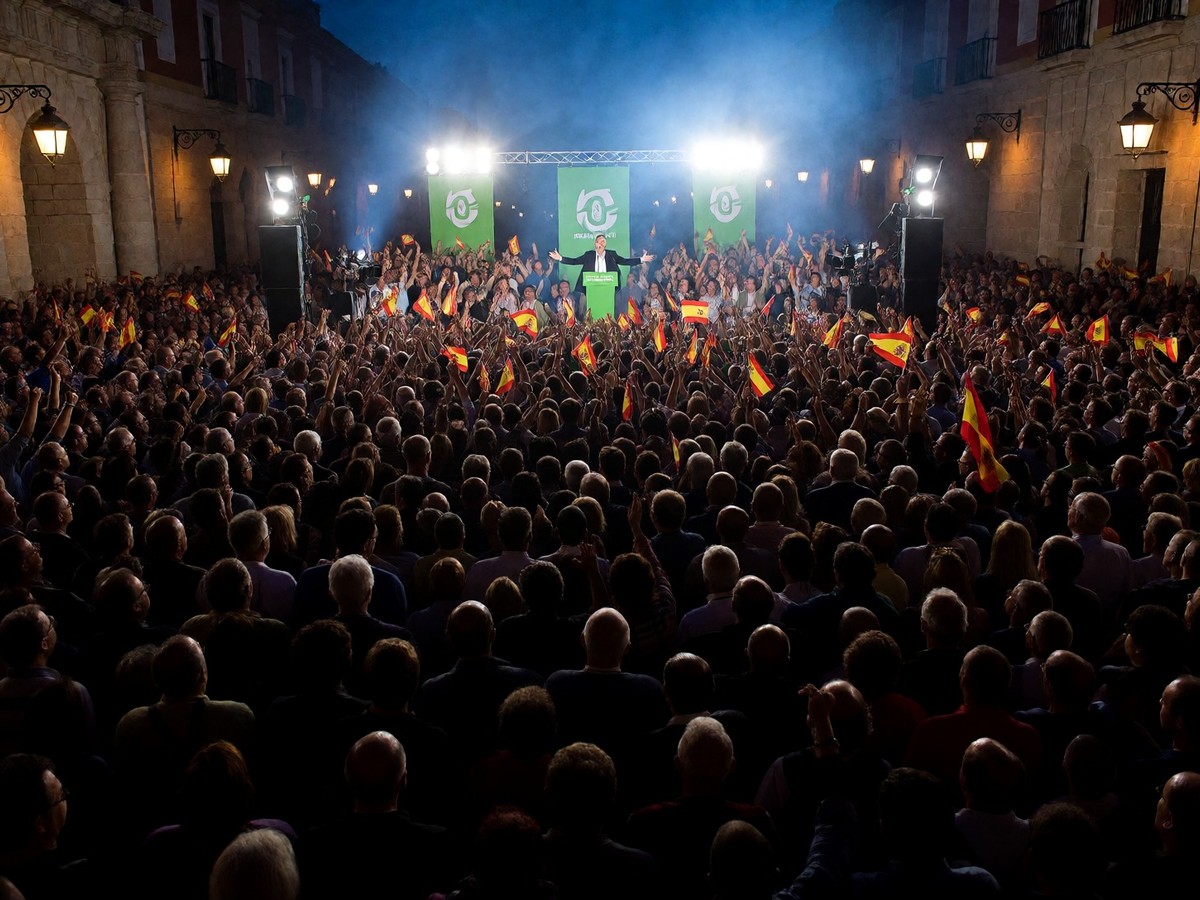
Santiago Abascal held a final rally for Vox in a Valencia bull-ring before thousands of people. The venue contained Spanish flags and green Vox banners. Secretary general Ignacio Garriga called for "less burka and less halal," stating he acted out of love for the homeland. A small section of the crowd chanted "Viva Franco." I observe how immigration issues drive the youth toward the far right. Lledo, an 18-year-old voter, said the summer crisis in Ceuta, where more than 70,000 migrants crossed from Morocco into Spanish territory, showed that Sanchez lacks the ability to control the national border. Carli Chilet, Lledo’s aunt, argued that Vox "are the best for women’s rights."
Vox seeks to nearly double its previous 33 seats. The party supports "national priority" for welfare and "remigration" for foreigners not contributing to the economy. According to the polling institute 40dB, the proportion of female Vox supporters now stands at one for every 1.29 men, a significant narrowing from last year when there was only one female supporter for every 1.7 men. Abascal accused Sanchez’s government of "betraying, robbing and lying" to the country. He also attacked the Madrid regional government for awarding an honorary medal to the Israeli government.
Women’s rights and the housing crisis
The political outcome depends on women, who outnumber men by roughly 1.2 million voters. Carmen Aguilera-Carnerero from the University of Granada explains that Sanchez aims to tap middle-aged women who fear extremist shifts. She notes that many in their 30s or 40s understand how their situation changed under left-wing governments. I find the housing crisis the most pressing issue for many voters. Feijoo promised to build a million homes over four years, while Sanchez argued housing should be a right, not an object of speculation or profit. The Socialist leader called the election after right-wing parties voted down emergency housing measures on October 5.
The feminist group Asambleas Feministas Abiertas de Cantabria reported that people feel exhausted by rent and precarity, noting that the progressive government did not deliver on its promises. They noted that whether energy turns into votes depends on the left providing a reason for support. Antonia Avalos Torres, founder of Women Survivors of Gender-based Violence, criticized the local right for removing grants for psychologists, social workers, and lawyers. She accused the right of attempting to bar immigrant women from housing and social benefits. The PP plans to revise a 2023 "trans equality law" to remove the right to gender self-determination.