The Supreme Court ruling
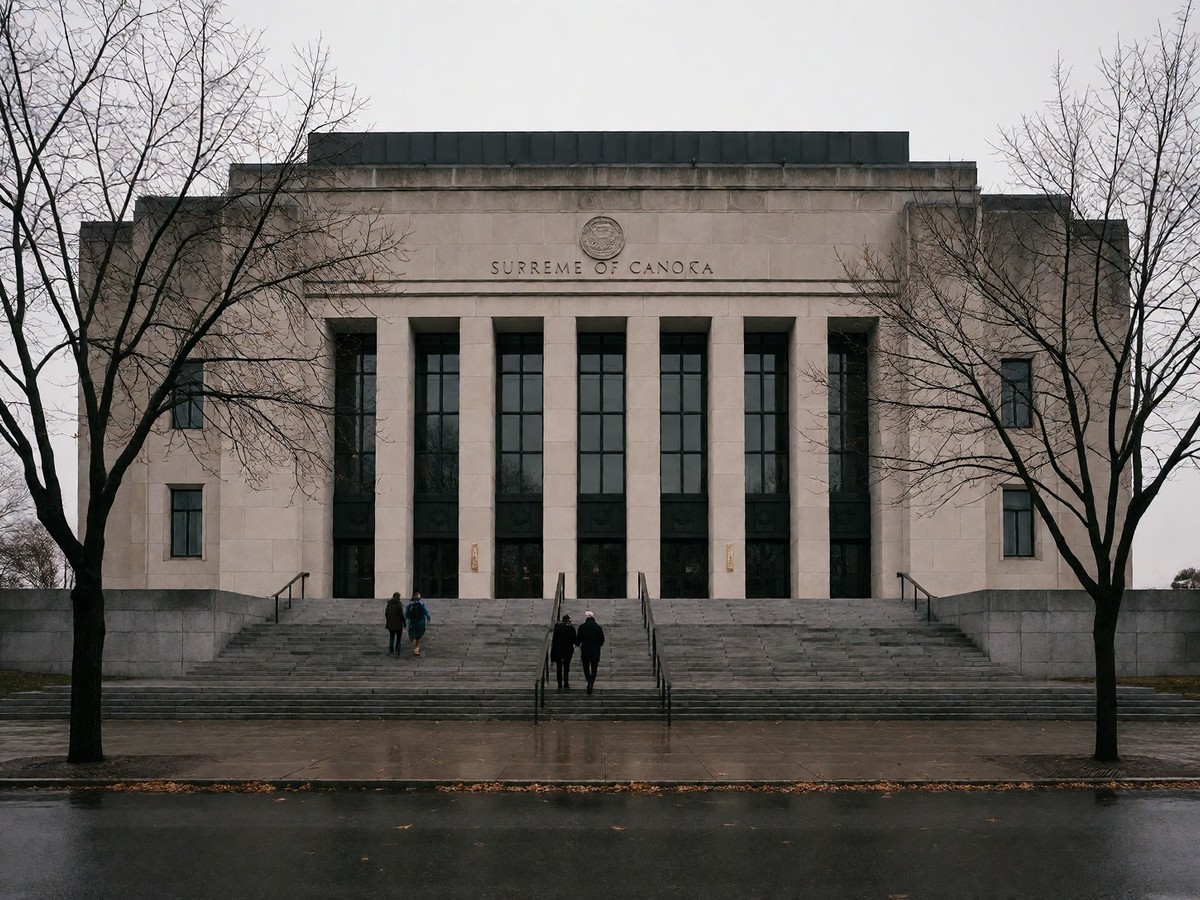
The Supreme Court of Canada upheld Quebec’s ban on religious symbols for public servants on Friday. This decision maintains the restrictions in Bill 21, which prevents certain public employees from wearing items like hijabs, turbans, and yarmulkes while at work. Chief Justice Richard Wagner wrote that the law is "rooted in Quebec’s legitimate and historical commitment to ensuring the (secularism) of the state in a free and democratic society." I find the court’s decision to leave the ban in place while allowing an exception for lawmakers a fragmented resolution to a deep constitutional conflict. The court ruled that provincial lawmakers in the National Assembly may wear religious symbols, finding the face-covering requirement infringed on democratic rights. Regarding the use of the notwithstanding clause, the court found that Quebec used the power lawfully. This clause, part of the Canadian Charter of Rights and Freedoms, lets provincial governments keep a law in force even if it violates certain Charter rights, such as freedom of religion or the right to equality. The override lasts up to five years and can be renewed, and Quebec used it when passing Bill 21 in 2019 and renewed it in 2024. Four of the seven justices agreed that judges can formally declare that a law violates Charter rights even if the notwithstanding clause keeps the law in effect to vindicate affected individuals. Only three of the justices would have issued such a declaration in this case, so the court issued none.
Impact on religious minorities
Critics argue the law unfairly targets Muslim women and weakens legal protections for fundamental rights. Stephen Brown, the chief executive of the National Council of Canadian Muslims, called the ruling "a dark day in our constitutional democracy." Brown stated that in our country, in the 21st century, "entire categories of people are now barred from entire sectors of employment, not because of what they have done, but because of who they are." He said the law forced many Muslim women to stop working as teachers or prevented them from volunteering in schools. Emmett Macfarlane, head of political science at the University of Waterloo, said the law amounted to "Islamophobia as a state policy."
The law has reshaped lives and led to people losing their jobs or leaving Quebec to continue working in their professions because they must choose between their careers and how they practice their faith. For example, teachers who were already in their posts on March 27, 2019, could continue wearing religious symbols as long as they stayed in the same role with the same employer. However, Quebec has since widened restrictions to support staff and volunteers at school under Bill 94 and to daycare staff under Bill 9. Nevien Waly, who wears a hijab, said she could not volunteer at her children’s school under Bill 94 and expressed disappointment with the ruling. She said she is encouraging her children to excel in school so they would have the option to leave Quebec. Justices Andromache Karakatsanis and Michelle O’Bonsawin wrote in a partial dissent that the law "non-trivially influences life choices and mobility" and falls most heavily on Muslim women. They also noted reports of more verbal and physical abuse from some members of religious minorities.
Political reactions and provincial rights
Mathieu Levesque, representing the interim right-wing Quebecois nationalist Future Quebec Coalition, called the decision a "victory" for the province. He said the court’s ruling today fully validated the actions of the CAQ, which ruled Quebec from 2018 to 2026 before failing to enter parliament and seeing the pro-independence center-left Parti Quebecois form government. Quebec Premier Paul St-Pierre Plamondon also welcomed the decision, saying he worried about social peace if the Supreme Court had invalidated the choice.
Alberta Premier Danielle Smith said the decision is "a win for provincial rights" and wrote on X that elected legislatures should have the final say on important questions. Mark Carney, the Prime Minister, told CBC that his colleagues in Ottawa are "carefully studying" the 500 page ruling. The Canadian Civil Liberties Association said the ruling "sends a message that even shielded laws cannot escape scrutiny entirely." Brown of the National Council of Canadian Muslims noted the ruling came as governments across Canada used the notwithstanding clause, such as in Saskatchewan’s legislation affecting LGBTQ youth and Alberta’s use regarding a collective agreement for teachers. Brown noted that the clause was intended to be an instrument of last resort, but it has become an ordinary instrument of government.